NVIDIA and Partners Unveil AI-First Manufacturing Era at Hannover Messe 2026
HANNOVER, Germany – April 20, 2026 – NVIDIA and a coalition of global industry leaders today launched a sweeping vision for AI-driven manufacturing at Hannover Messe 2026, declaring that the factory of the future is no longer a concept but an operational reality. The event, running April 20-24, showcases how accelerated computing, AI physics, agentic AI, and robotics are transforming every stage of production—from design to factory floor.
“The question is no longer whether to adopt AI, but how fast and at what scale,” said Dr. Sarah Klein, NVIDIA’s Vice President of Industrial AI, during the opening keynote. “Our partners and customers are demonstrating that AI infrastructure, real-time simulation, and autonomous robots are ready for prime time.”
The centerpiece of the show is the Industrial AI Cloud, one of Europe’s largest AI factories built by Deutsche Telekom on NVIDIA AI infrastructure. This sovereign platform provides a secure, scalable foundation for industrial workloads, including digital twins, AI-powered design, and software-defined robotics. Learn more about the background.
Background
Manufacturing stands at an inflection point. Across every major industrial economy, pressure to do more with less—due to faster design cycles, leaner operations, and a shrinking skilled labor pool—is accelerating the shift to AI-driven production. The need for unified, secure infrastructure that can run AI at scale across factories and supply chains has become paramount.
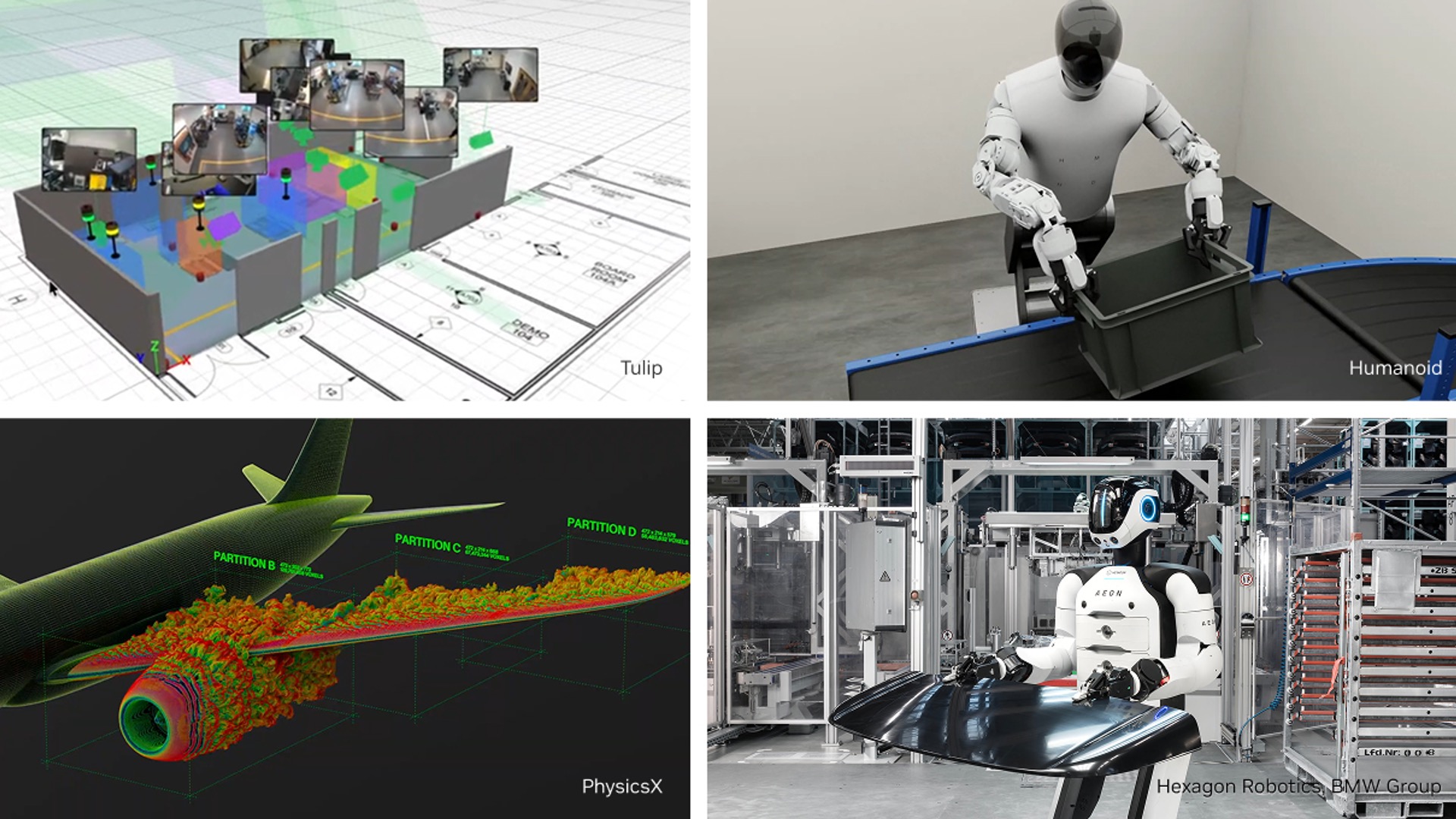
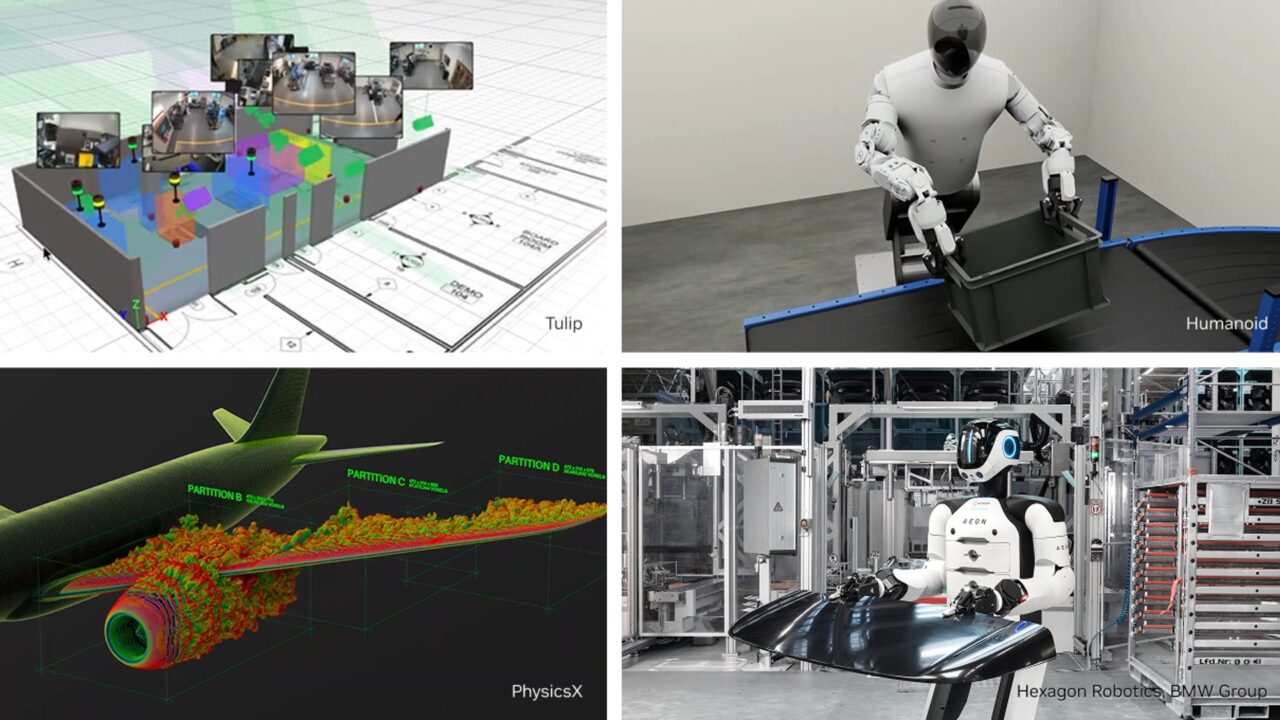
Against this backdrop, NVIDIA and its partners have been building the technological building blocks: from AI physics and agentic workflows to humanoid robots operating in real factory environments. Hannover Messe 2026 serves as the proof point for these advances.
What This Means
For manufacturers, the implications are profound. AI-driven engineering cuts design cycles from weeks to hours, while real-time simulation allows virtual testing before physical builds. Vision AI agents and autonomous robots reduce reliance on manual labor, addressing chronic workforce shortages.
“European industry now has a sovereign AI backbone that can accelerate innovation while maintaining data security,” said Thomas Müller, CEO of Deutsche Telekom’s Industrial Solutions division. “This is a game-changer for competitiveness.”
EDAG, a leading independent engineering service provider, has already announced it will run its industrial metaverse platform, metys, on the Industrial AI Cloud, bringing sovereign AI infrastructure to automotive and industrial engineering at scale.
AI Infrastructure: The Industrial AI Cloud
At the show, industry leaders including Agile Robots, SAP, Siemens, PhysicsX, and Wandelbots are demonstrating AI-accelerated workloads on the Industrial AI Cloud. These range from AI physics-driven real-time simulation to factory-scale digital twins and software-defined robotics.
To meet surging demand, Dell Technologies, IBM, Lenovo, and PNY are showcasing NVIDIA-accelerated systems spanning edge to data center. These systems enable manufacturers to run faster simulations and deploy computer vision, AI agents, and robotics in production at scale.
AI-Driven Engineering and Simulation
As industrial systems grow more complex, engineering software is being transformed. Cadence, Dassault Systèmes, Siemens, and Synopsys are integrating NVIDIA CUDA-X, AI physics, and NVIDIA Omniverse libraries, as well as NVIDIA Nemotron open models, across their software. This enables real-time, physics-grounded simulation, AI-powered design exploration, and agentic workflows that empower engineers.
“We are seeing a paradigm shift where AI physics replaces traditional solvers for many tasks, cutting simulation time by orders of magnitude,” explained Dr. Klein. “Engineers can now explore thousands of design variations in the same time it used to take for one.”
Robotics and Humanoids in the Factory
Several partners are also demonstrating advanced robotics, including humanoid robots operating in factory settings. These robots leverage NVIDIA’s AI platform for perception, reasoning, and manipulation, enabling them to perform complex assembly and inspection tasks alongside human workers.
“The combination of sovereign AI infrastructure and advanced robotics means factories can be retooled faster and operated with greater flexibility,” said Müller. “We are building the foundation for the next industrial revolution.”
For more details on the technologies being showcased, return to the AI Infrastructure section or review what this means for industry.
Related Discussions