Scorpions' Secret Weapon: How Nature Forges Biological Metal Armor
Introduction: The Armored Predator
Scorpions are ancient arachnids that have roamed the Earth for hundreds of millions of years. Their iconic weaponry—a pair of front pincers (scientifically called chelae or pedipalp appendages) and a venom-injecting telson (stinger) at the tip of the segmented tail—makes them formidable predators. But recent research reveals these natural weapons are even more extraordinary than they appear: they are reinforced with metals like zinc, manganese, and iron.
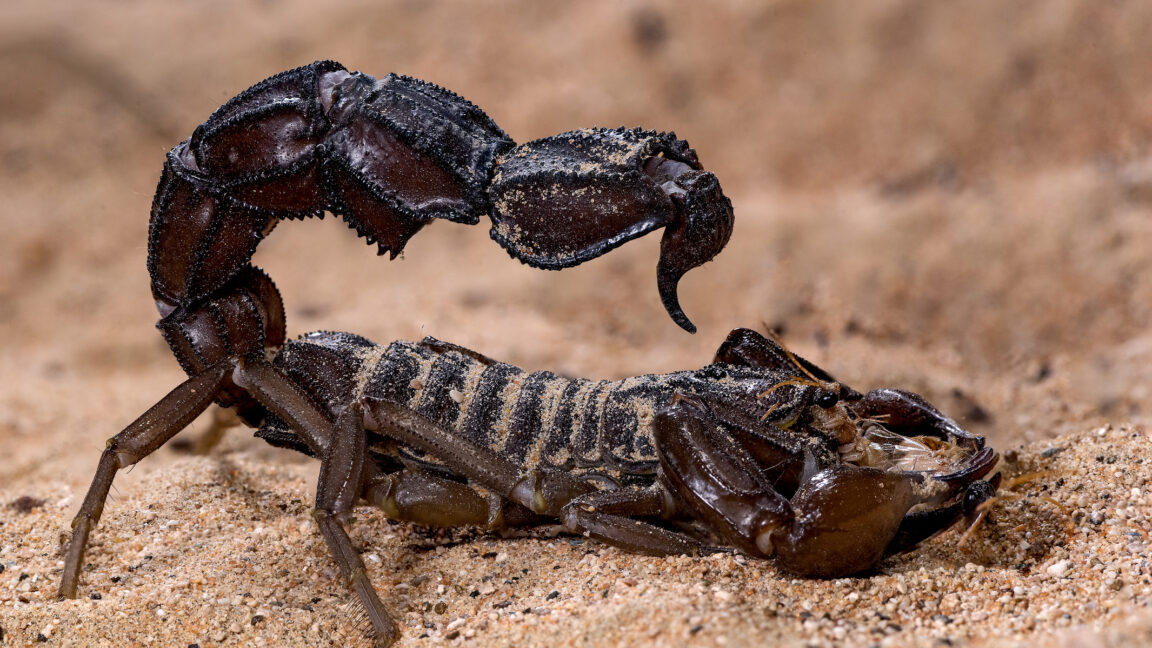
The presence of these metals in scorpion exoskeletons has been known since the 1990s, but a new study sheds light on a fundamental question: Did scorpions evolve this metallization as an advantage, or is it merely an accidental byproduct of their environment? As we explore below, the answer transforms our understanding of how nature hones biological tools.
The Accidental or Intentional? A Decades-Old Mystery
Biologists have long wondered whether the metals found in scorpion pincers and stingers are actively deposited by the animal for structural reinforcement or simply picked up from soil, water, or prey. Sam Campbell, a biologist at the University of Queensland, Australia, summarized the puzzle: "That the metals are there has been known since the 1990s. What we didn't know was whether scorpions evolved to be like that or if it was accidental and they were just picking the metals up from the environment."
To resolve this, Campbell and his colleagues conducted a detailed chemical analysis across multiple scorpion species, focusing on how metals are distributed in the stingers and pincers. If the metals were environmentally passive, their distribution would vary randomly. But if they were biologically controlled, the patterns would be consistent and strategic.
The Research Study: Evidence of Evolutionary Design
Methodology: Mapping Metal Distribution
The team used advanced microscopy and spectroscopy techniques to examine the exoskeletons of several scorpion species. They measured concentrations of zinc, manganese, iron, and other elements in the pincers, telson, and other body parts. By comparing different species and individuals from varied habitats, they could determine whether metal deposition was species-specific and consistent—hallmarks of an evolved trait.
Findings: Not Accidental, But Deliberate
The results, published in a recent study in the Journal of The Royal Society Interface, show that the metal distribution is far from random. In all examined species, the highest concentrations of metals were found precisely at the tips of the pincers and the stinger—the points of maximum mechanical stress and impact. Moreover, the patterns were consistent across species, regardless of their geographic range or local soil chemistry. This strongly suggests that scorpions have evolved specialized biological mechanisms to actively incorporate metals into their exoskeleton, turning their weapons into a form of biological metal armor.
"Based on our data, there was nothing accidental about it," Campbell noted. The intentional deposition of metals likely hardens the cuticle, making pincers more durable for grasping prey and the stinger more resistant to breakage during venom injection.
Implications and Future Research
This discovery places scorpions among a select group of animals that biomineralize metals for functional purposes. Other examples include the zinc-reinforced teeth of some marine worms and the iron-infused radulae of mollusks. The scorpion case, however, is particularly striking because it involves both offensive (stinger) and defensive (pincers) structures.
Understanding how scorpions control metal deposition could inspire new materials science applications—such as creating lightweight, corrosion-resistant coatings or self-sharpening tools. Additionally, the study raises questions about the evolutionary timeline: Did this metallization arise once in a common ancestor or independently in different lineages?
Future research may explore the genetic and biochemical pathways involved, as well as whether other arachnids (like spiders or whip scorpions) employ similar strategies. The findings also underscore the importance of looking beyond surface-level anatomy to uncover the hidden complexities of animal adaptations.
Conclusion: Nature's Terminator Mode
Scorpions have long been symbols of danger and resilience. Now we know they truly live up to that reputation at the molecular level. By reinforcing their pincers and stingers with metals like zinc, manganese, and iron, they enhance the durability and effectiveness of their natural weapons—essentially turning them into biological "terminator" tools. This is not a random accident of environment but a sophisticated evolutionary adaptation perfected over millions of years.
As Campbell's research demonstrates, sometimes the most familiar creatures still hold remarkable secrets. The scorpion's arsenal, already formidable, is now proven to be even more sophisticated—a product of evolution's enduring ingenuity.
Related Discussions