A Bold Experiment: Reducing the Genetic Alphabet to 19 Amino Acids
The Universal Genetic Code
The genetic code is often described as the language of life—a near-universal system that translates DNA sequences into proteins. With only minor variations across different organisms, all living things rely on the same triplet codons to specify 20 standard amino acids. This remarkable consistency has led scientists to believe the code originated in the last universal common ancestor (LUCA) billions of years ago. But how did this code evolve? Many researchers hypothesize that early life forms used a simpler, abbreviated version with fewer than 20 amino acids, gradually adding new building blocks over time.
Evolutionary Origins of the Code
Theories of a Simpler Past
According to leading hypotheses, the earliest genetic code was likely incomplete—encoding only a handful of amino acids before expanding to its present form. This idea is supported by the fact that some amino acids are synthesized through complex pathways, suggesting they were later additions. To test this concept directly, a team of researchers from Columbia University and Harvard University set out to determine whether modern life could function with just 19 amino acids. Their goal: to remove one of the standard 20—specifically, isoleucine—from a critical component of the translation machinery.
The Experimental Approach
Why Remove an Amino Acid?
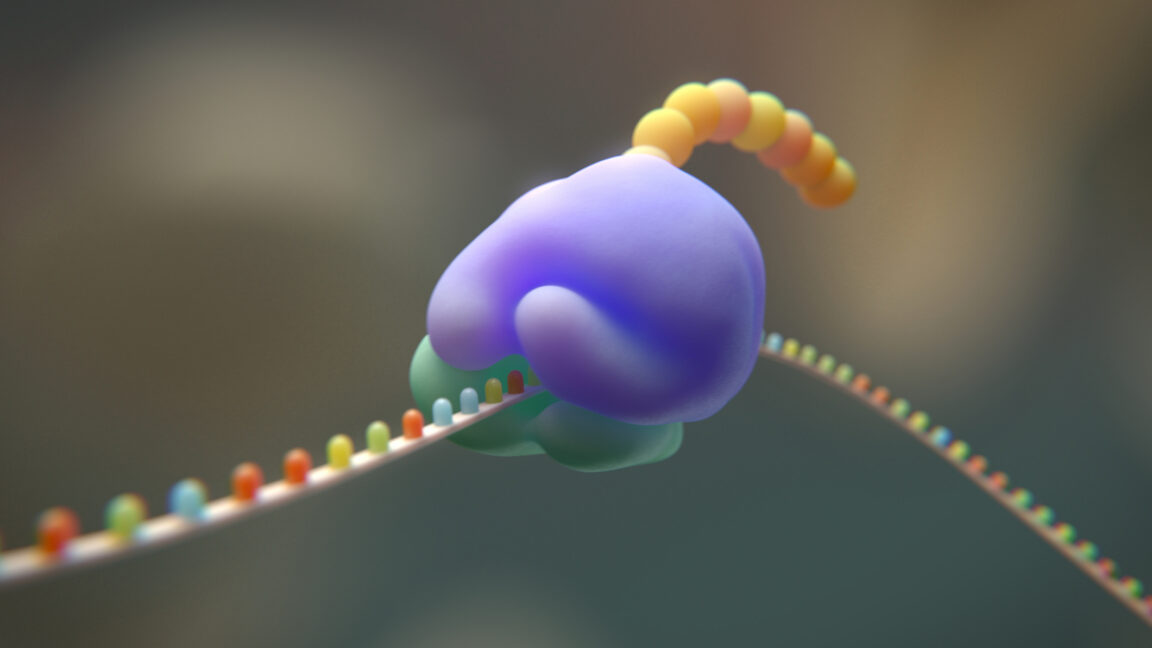
While most genetic engineering focuses on expanding the code—for instance, incorporating unnatural amino acids to enable novel chemistry—this study took the opposite approach. By reducing the set, the scientists aimed to mimic possible early evolutionary states and test the flexibility of the ribosome. The ribosome, the molecular machine that assembles proteins, is a prime target because it must itself be built from amino acids. If the ribosome could function without isoleucine, it would demonstrate that life can indeed operate with a reduced repertoire.
Targeting Isoleucine
Isoleucine is a hydrophobic amino acid essential in many proteins, including ribosomal proteins. The team engineered a ribosomal protein that normally contains isoleucine, replacing it with other amino acids to see if the ribosome could still fold and function. After systematic testing, they succeeded in creating a version of the ribosome that worked without any isoleucine—proving, at least in a limited context, that the genetic code can be trimmed by one unit. This result supports the idea that early life may have managed with fewer than 20 amino acids.
Implications and Future Directions
Redefining the Limits of Life
This experiment opens up new questions about the minimum number of amino acids necessary for a functional genetic code. Could we go further and reduce it to 15 or even 10? The findings suggest that life might have considerable redundancy, allowing some amino acids to be replaced or omitted. This has implications for synthetic biology, where researchers aim to design minimal cells with streamlined genomes. Understanding which amino acids are truly dispensable could guide the creation of novel life forms with tailored genetic codes.
Challenges Ahead
Of course, this is only a first step. The study focused on a single ribosomal protein; extending the approach to the entire cell would be vastly more complex. Many proteins rely on isoleucine for specific structural roles, and eliminating it globally could be lethal. However, the proof-of-concept demonstrates that evolution's path may have included periods of reductive evolution, where the code shrank before expanding again. Future work will explore other amino acids and attempt to engineer whole organisms with 19-amino-acid proteomes.
Conclusion
The bold attempt to cut the genetic code from 20 to 19 amino acids is more than a clever experiment—it's a window into the deep history of life on Earth. By showing that the ribosome can operate without isoleucine, researchers have provided evidence for the plausibility of simpler ancestral codes. This work not only illuminates evolution but also pushes the frontiers of synthetic biology, bringing us closer to designing custom genetic systems. As the team from Columbia and Harvard continues their investigations, we may soon discover that the language of life is far more flexible than we ever imagined.
Related Discussions